GLFx Nairobi partnered with Ubunifu Hub, Kenya Environmental Action Network (KEAN), and CIFOR-ICRAF’s Regreening Africa Program to organise the Urban Restoration Dialogue. It had a total of 26 participants drawn from youth groups based in Nairobi County. These groups were Komb Green Solutions, Wise Men Society CBO, Green Oasis Lens (GOAL), Kasarani Young Mothers, Simplicity CBO, Chiromo Environmental Action Club (CEAC), Young Men Resilience Organisation, and Lucky Summer Environment and Waste Management Organisation (LEMWO). All the groups are involved in various environmental activities such as waste management, riparian land restoration, ecological farming, and community sensitisation on environmental conservation.
The dialogue took place on Friday, 24th June 2022 at Ubunifu Hub, Garden Estate, Nairobi, Kenya. Here are some of the pictures taken during the event.
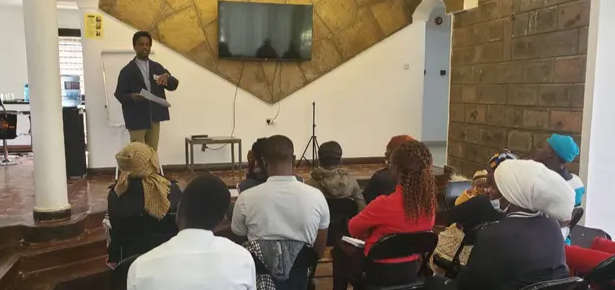
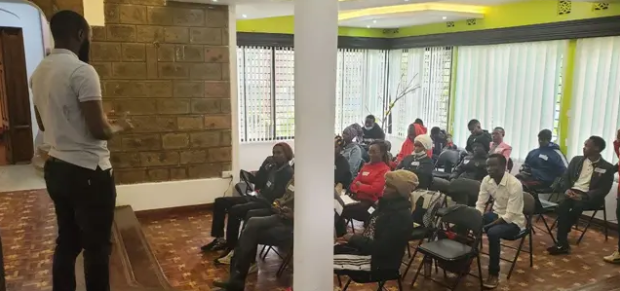
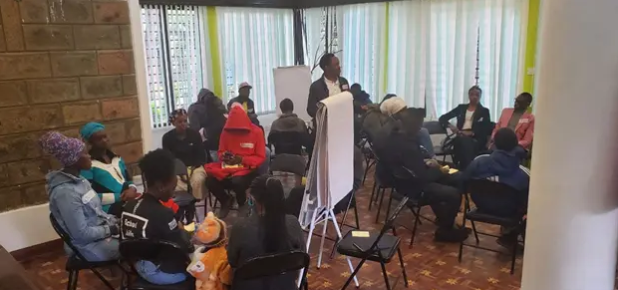
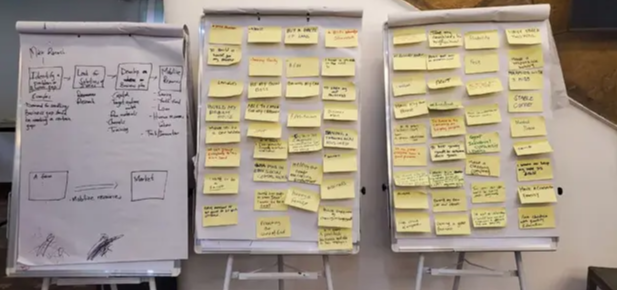
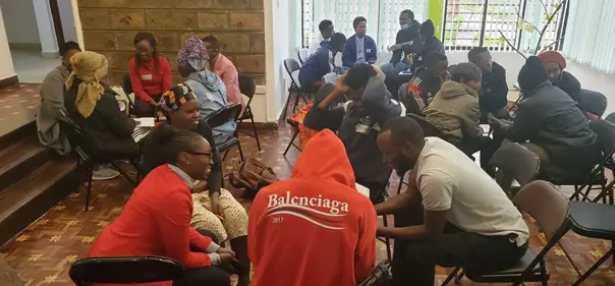
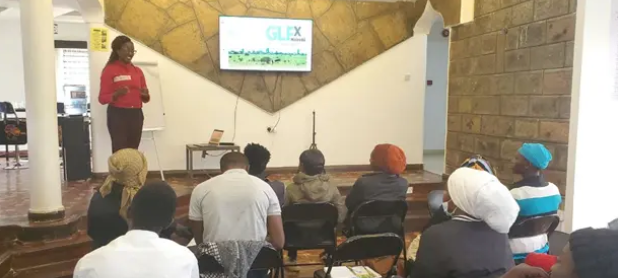
Picture 1: Daniel Kihori (GLFx Nairobi), one of the dialogue facilitators, kicks off the dialogue with an introduction on what the dialogue aims to achieve.Picture 2: Japheth Orieny (KEAN) takes questions from the audience.Picture 3: Kiptoo Chemiowo (GLFx Nairobi) takes notes of the points put across by the participants in the dialogue.Picture 4: The board that was generated by the end of the day from the contributions of the participants noting their activities, opportunities, challenges, and the assistance required to address those challenges in the context of urban restoration. PS: Nowhere did anyone mention tree planting as a solution to the challenges addressed.Picture 5: The participants broke up into groups to be able to further drill into how they achieved their present success and the root causes of their existing challenges. Furthermore, the focus groups served to get everyone present involved in the conversation.Picture 6: Winnie Achieng (Regreening Africa Program) leads the team in an exercise on “Community Vision Mapping”. The exercise aimed to help the participants create a common vision for their landscapes and develop solutions unique to their environments and challenges. Vision mapping is a critical approach to understanding the view of the community or group and their aspirations and desires for the future.